September 11, 2026
Building a Traditional Chinese Awareness and Search Journey for Akiyoshidai, Yamaguchi
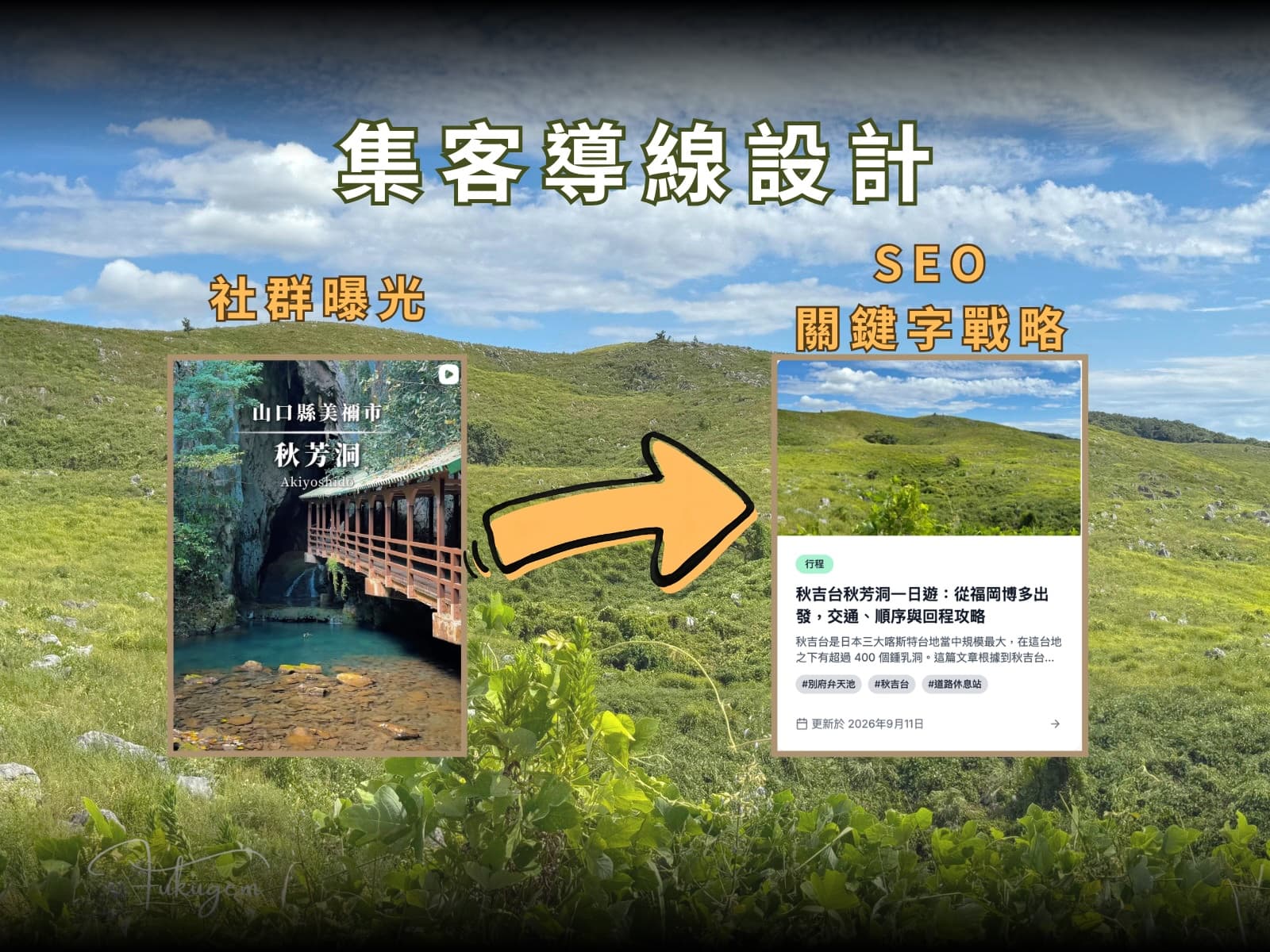
Scope of work: Strategy / On-site production / Traditional Chinese content production / Social media publishing / Search journey design
How We Designed the Journey
The role of social media is to make travelers think, “I want to see this place.”
Social media content first needs to answer two basic questions: What kind of place is this, and why is it worth visiting? Video, photography, and other visual formats are effective for quickly capturing attention and creating initial interest.
Once travelers become interested, the questions they ask change.
When they start planning a trip, they want to know more specific things: How do I get there? How long should I stay? What other destinations can I combine it with?
A single social media video cannot answer all of these questions. Instead, travelers move into information-seeking behavior, including Google searches and increasingly, questions asked to AI.
That is why the demand generated by social media needs to be supported by Chinese-language content.
If travelers cannot find enough Traditional Chinese information when they search, that demand does not simply disappear. It can shift to other destinations.
For regional destinations, a Chinese-language landing page is therefore not an optional add-on. It is an essential part of the overall journey for reaching and converting travelers in overseas markets.
Finally, we turn short-lived social media content into search assets that can accumulate over time.
The lifecycle of social media content is measured in days, while search content can continue generating value for months or even years.
That is why content created from the same field research should not end as social media posts. Instead, we develop it into different formats and uses according to each stage of the traveler's decision-making process.
Case Study
Year 1: Using social media to test whether Akiyoshidai could capture interest in Taiwan and Hong Kong
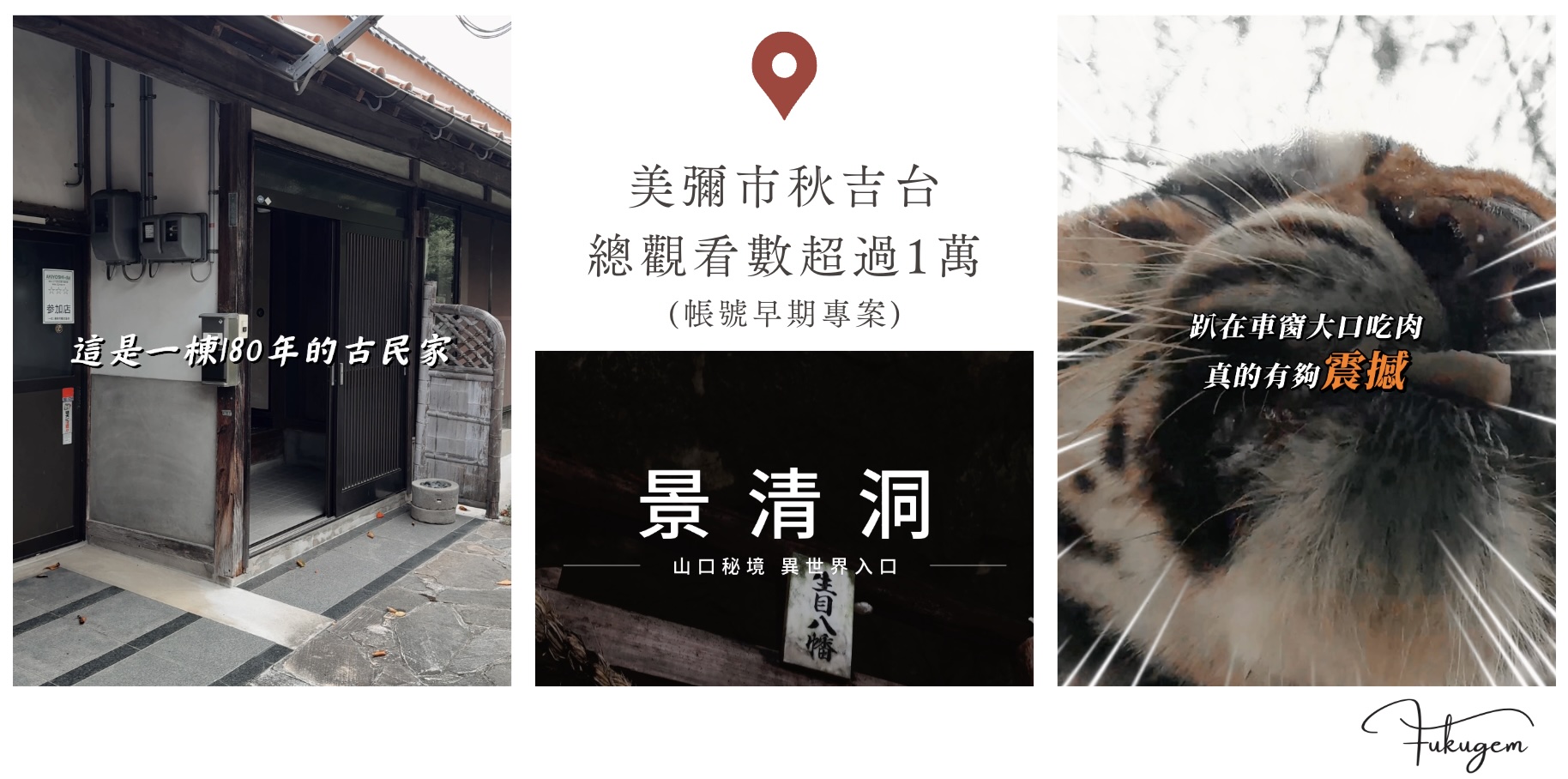
For our first engagement, we produced videos based on on-site research and distributed them through a newly launched Instagram account, generating more than 10,000 impressions in total.
At this stage, the focus was on observing how travelers in Taiwan and Hong Kong responded to Akiyoshidai-related content through actual exposure. We tested different angles to identify which approaches were most effective at generating interest, using the findings as a foundation for subsequent promotional strategies.
Year 2: Extending social media exposure into search (ongoing)
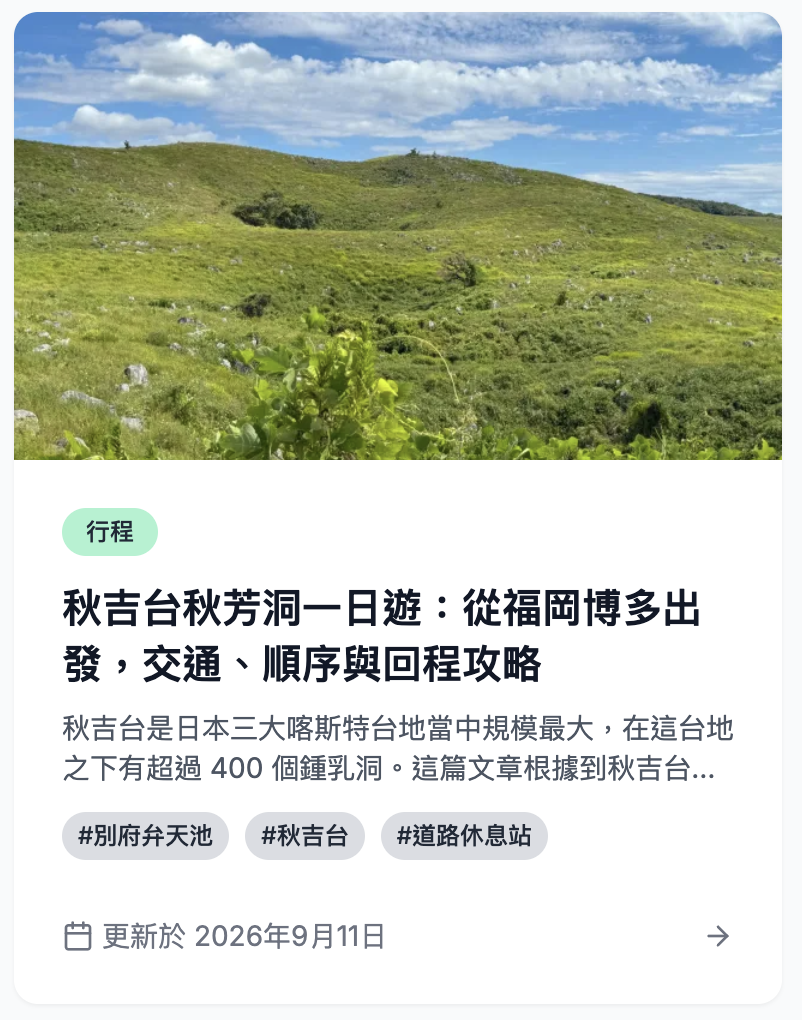
In September this year, we began supporting Akiyoshidai's second round of exposure. In addition to continuing video and social media distribution, we are developing Traditional Chinese landing pages and building a cluster of Yamaguchi-related content on FUKUGEM.
The first year focused on building awareness and interest through social media. In the second year, we are taking the next step by providing the search information travelers need after becoming interested, allowing attention generated through social media to continue into information research and trip planning.
Social media creates the trigger to think, “I want to see this place.” Search content answers the next question: “So, how should I plan my trip?”
This strategy is based on our previous measurement and testing
On our own platform, FUKUGEM, we have already observed that a concentrated wave of exposure on social media can also increase impressions and clicks in search.
However, once social media traffic subsides, search-side performance also returns to its previous level.
This indicates that while social media is effective for generating short-term interest, that demand is difficult to sustain without search content to support the next stage.
That is why, in the second year of supporting Akiyoshidai's exposure, we are not only continuing social media distribution. We are also developing Traditional Chinese landing pages and a cluster of Yamaguchi-related content, turning one-time exposure into search assets that can continue to accumulate over time.
Current Progress
- Year 1: Traditional Chinese social media exposure exceeded 10,000 impressions in total. During the campaign, we tested multiple content formats, including itinerary-focused content, interviews, variety-style formats, emotional storytelling, and individual destination features.
- Year 2: On-site research completed. Traditional Chinese landing pages and the Yamaguchi content cluster are being published progressively.
Conclusion
For a regional destination to be chosen by travelers in Chinese-speaking markets, what matters is not a one-time spike in attention. What matters is whether travelers can find enough relevant information to continue planning their trip when they are ready to start searching.
If you are considering overseas promotion in Traditional Chinese markets such as Taiwan and Hong Kong, or if you are already generating exposure through social media but are unsure how to capture and develop the demand that follows, please contact us.
To learn more about how we design the journey from awareness to search and travel planning for overseas travelers, see our Insights.